It’s fast approaching 12 months since our Head of Business Operations, Jon Keating, underwent a hip replacement operation.
The op took place in December 2024 and since then Jon’s been chronicling his (often painful) progress in his quest to attain full fitness having declared himself his very own case study.
In this fourth and final blog, Jon further reflects on what more a sector that specialises in physical activity can do to help people prepare for surgery, and what people can do to help themselves – if they’re willing to!
In my last hip replacement blog, I answered my own question. Yes, as a sector, we absolutely can do more to help patients prepare for surgery.
But as the weeks have turned into months, and after pushing hard to regain full fitness (sometimes to my own detriment), I’m happy to report that I’m pretty pleased with what I’ve achieved. It’s taken an awful lot of willpower and a willingness to suffer pain and discomfort.
After all this time, however, I can’t help but compare myself to someone else I know who has chosen not to engage in rehab and instead is actively pursuing early retirement due to ill health. They might be 14 years my senior, but they’re not ill.
As a sector, we are committed to supporting the NHS to help cut the stresses, strains and costs of treating people with long term health conditions (LTHCs), by helping to prevent them in the first place and managing them if and when it becomes necessary.
The cost to the system of this non-engaging individual is highly frustrating – possibly £70k a year (minimum) moving forward, when it could be avoided.
Mindset and a willingness to recover is clearly very different among the population. How do we support such folks, improve their quality of life and help them avoid future LTHCs? What’s the motivation or behaviour change required? You can take a horse to water, but you can’t make it drink, so the saying goes.
It amazes me, though, that someone is prepared to spend their future in pain when they don’t have to.
It’s two ends of the spectrum, someone like me who desperately wants to recover and get back to normal as fast as possible, versus someone with no motivation at all. Could education provide the motivation required?
To refresh your memory, I found myself on this journey as a result of something that happened when I was 16.
I suffered something called a slipped epiphysis of the left femur (or in my dad’s simplistic view – my leg tried to fall off).
Therefore, I was told, when I reached my 40s, or 50s, I could be susceptible to some complications. That prediction, sadly, came to fruition over the years and culminated in the need for the op last year.
So, what have I learned about myself?
How did I recover?
I’m back swimming regularly. Aqua jogging every Friday has been key to getting movement back and the joint working well again.
I had such fun laughing with the older ladies swimming head up breaststroke in the slow lane while I did my jogging. It added a sense of accountability, with two of the regulars, Vanessa and Sylvia, telling me off if I missed a week.
I’m fortunate that I can work my diary to be able to attend the rehab and recovery sessions in the day (3pm). But I do wonder if opening up small pools for these sessions in the evening would be beneficial to those working 9-5. Small pools are often sat dormant later in the evening once lesson programmes have finished.
Getting back in the gym – making sure I didn’t skip leg day – was an important part of rehab too.
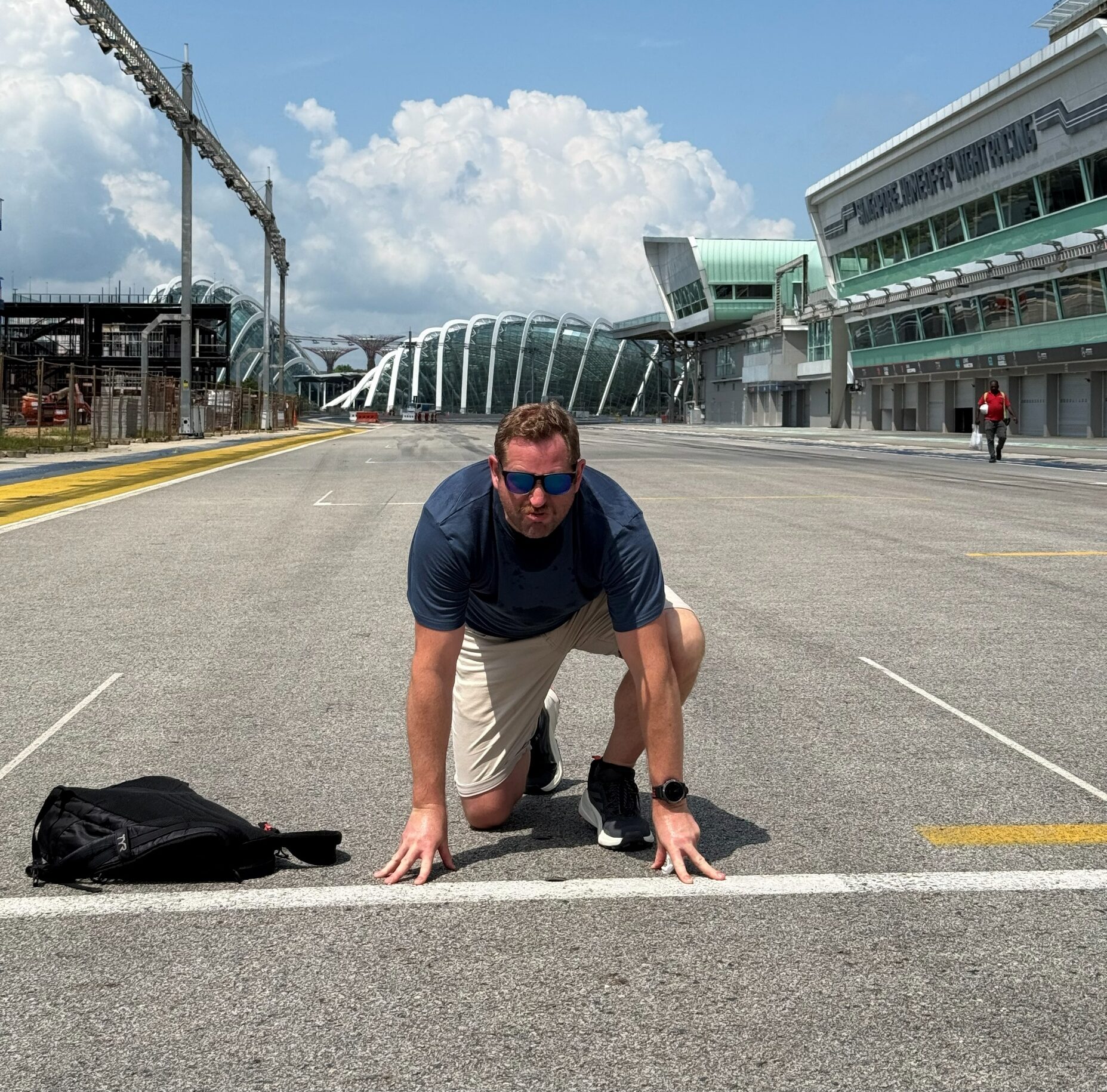
About six months in I had a chat with my physio about being able to try running again. He said yes, so I downloaded the ‘couch to 5k’ app.
I struggled with three runs a week. I needed a couple of days between each run rather than just a day. So, completing that journey took about 13 weeks rather than nine.
All in all, with hugely supportive friends and family around me, and of course, a hugely supportive workforce from a GM Active perspective, I feel I’ve returned to full health.
I’m a regular user of the Boditrax machines at Life Leisure gyms in and around Stockport. Metabolic age is probably the measure I look at a lot.
Pre-surgery as my ability to exercise became less and less (or maybe it was just me not being tough enough to work through the pain barrier), my metabolic age was already rising. I was gaining weight and years – seven to be precise.
Post surgery and after a number of weeks of walking on crutches, I’d gained 12 years, peaking at a metabolic age of 45.
Almost 12 months on and I’m definitely fitter and lighter. At the last check, my metabolic age was 34. And I avoided the temptation to take the GLP-1 option to lose my post-surgery weight gain!
Before I sign off from this journey, I’d like to pay tribute the care given to me by my partner at the time, Emily. This is her insight into everything we went through.
“Jon will talk about being a terrible patient, but in truth he wasn’t at all. It was a major operation with a very tough recovery – I’d say he was a pretty good patient given what he went through.
“The recovery was brutal. There is no way anyone could cope alone in those early days. I’d say for the first week he needed someone with him 24/7. Helping him in and out of bed, on the stairs, in the shower, help to get dressed. Preparing drinks and meals, ensuring he takes his tablets at the right time. Ensuring he rests enough and does his rehab.
“Walks outside with the drive like an ice-rink. If Jon does have the other hip done, I’d say a spring/summer operation would be more beneficial.
“Throughout his recovery Jon has had bad days, and days where he’s perhaps done too much.
“A few things stick in my mind through Jon’s journey, but I hope he doesn’t mind me reminding him of the journey home from hospital.
“Jon was in awful pain, that much was clear. The traffic was horrendous, nose to tail. My fear was that someone would drive into the back of us in the heavy, slow-moving traffic.
“So, I opted for a different, quieter route home. A route I’d not used for quite some time. I wasn’t aware that this particular stretch of road had about 20 speed bumps on it.
“Trying my best to go over them slowly. Silence in the car. I’m holding my breath feeling awful about my terrible choice; Jon wincing in pain over each one.
“Try going over them quicker, it’s less painful’,” he said!”
Thank you for all your care and support, Emily!
And finally…
Here’s my final food for thought for our industry.
I strongly believe we should be making stronger links with physios to aid patients’ recovery.
Perhaps physio appointments that include body composition/metabolic age data would help with those struggling to engage with rehab.
I’ve been fortunate that I can work flexibly. It makes it easier to drive connections to people who can help and guide you, creating access to facilities and thus helping with personal motivation.
I’ll finish where I started. I 100% believe we can do more!