Experience, education and data garnered by the pioneering Prehab4Cancer (P4C) programme in Greater Manchester has helped to shape national guidelines on cancer care adopted by the NHS and Macmillan Cancer Support.
The updated guidance builds on that first published in 2019, the year of P4C’s inception to provide exercise, nutrition and wellbeing advice and support to patients with lung, colorectal (bowel) and oesophageal and gastric cancers, often referred to as upper GI cancers.
P4C was, and still is, the first UK ICS-delivered prehabilitation and recovery programme for cancer patients, via a partnership between GM Active, a collective of 12 public leisure centre operators in the city-region, and GM Cancer Alliance. It facilitates engagement in exercise, nutrition, and wellbeing assessments and interventions before, during and after treatment.

The 2025 update has been developed with input from Dr John Moore, P4C’s Clinical Medical Lead, and Zoe Merchant, its Allied Health Professional (AHP) Clinical Lead, and is based on detailed, evidence-based recommendations for designing and delivering cancer prehabilitation services.
It positions prehabilitation at the forefront of cancer treatment on a national scale, setting out clear recommendations and providing practical information to help organisations develop prehab services for their local populations.
It also reflects the growing acceptance of prehabilitation as a core component of treatment and highlights the need to expand provision, particularly through collaboration – an area where the leisure sector can play a key role.
One of the recommendations says Specialist Exercise Instructors should be an integral part of the nationally recognised workforce required to support patients undergoing cancer treatment through prehabilitation.
Jack Murphy, P4C Programme Leader, says: “The six years we’ve been supporting cancer patients in Greater Manchester have enabled us to now see the emerging trends that prove that with physical activity and our support, people can take a proactive role in their own care and have a positive impact on their health outcomes.
“Receiving a cancer diagnosis is a bombshell, but by engaging in P4C, it empowers patients to take back control of the diagnosis, whilst optimising their physical and mental condition, which helps them to cope better with the rigours of cancer-related treatment.”
P4C is now embarking on a workforce development and upskilling initiative for staff working in the 99 leisure centres embraced by GM Active to increase focus on embedding rehabilitation within community and leisure-based settings.
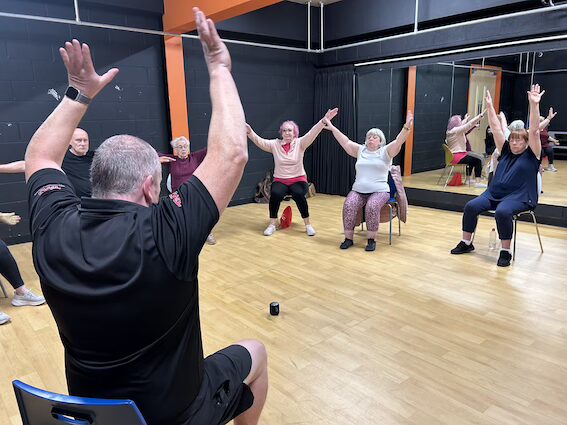
It is launching with a targeted education and upskilling workshop in April that will include exercise components, including HIIT training, education about nutrition and cancer-specific clinical considerations.
Jack Murphy: “The aim is to strengthen leisure centre staff knowledge, skills, and confidence in supporting people living with, and beyond cancer – ensuring patients’ needs are met safely and effectively by our leisure centre colleagues supporting patients on behalf of P4C during the rehab phase of their treatment.
“Importantly, though, this is not a locally driven aspiration for Greater Manchester, but something endorsed in the updated national guidance. It underpins the rationale for our education day, helping colleagues understand both the importance of their role and why this work is being taken forward.”
Delivered by prehab and rehab specialists, specialist clinical staff and cancer nurse specialists, the workshop will feature training on communications to guide conversations with worried patients.
It is accredited by ‘Sage and Thyme’, the UK’s most widely taught and evaluated foundation level communication skills training developed by Manchester NHS Foundation Trust, and includes:
• Noticing when people are worried or upset
• Responding in a controlled and organised way
• Guiding the conversation from their worries to their support
• Being supportive without having to fix their problem
Meanwhile, Zoe Merchant and Jack Murphy have been discussing the importance of physical exercise and the P4C programme on the Four Ways Forward podcast, which you can listen to here.
P4C has just come under scrutiny for an evaluation report carried out by NHS Arden and Greater East Midland Commissioning Support Unit as part of a recurring funding process, the findings of which reinforced those of a similar evaluation in 2021 when P4C was first granted recurring funding.
Although the full report is not yet published, the initial findings showed:
A threefold increase in annual referrals since P4C’s inception – from 604 in 2019 to 1,782 in 2025.
Significant improvements in quality of life and functional capabilities.
Better strength and aerobic capacity.
Improved nutrition.
The latest outcomes corroborate independent research first used to secure recurrent funding for Greater Manchester P4C, which found that hospital patients were able to be discharged home sooner and enjoyed a better recovery.
Headline results for colorectal patients included:
The shorter hospital stays ‘released’ 550 ward beds days and 146 critical care bed days, resulting in increased capacity and patient flow.
Bed days ‘released’ from 1,000 colorectal prehab patients enables 179 additional patients to access timely surgery.
Bed days ‘released’ per prehab patient cover the costs involved in setting up and delivering P4C for a year.
The latest outcomes are determined using the following benchmarks:
A mum-of-two from Wigan in Greater Manchester is urging people to attend their NHS lung cancer screening, saying it saved her life.
Gillian Glynn, 60, was invited for a lung health check when a mobile clinic visited her local Asda supermarket.
The programme offers screening to people aged 55 to 74 who smoke or used to smoke.
Despite not having any symptoms, the screening led to a lung cancer diagnosis and eventually a referral to P4C sessions at Gillian’s local leisure centre to prepare her for surgery.
She says: “Prehab was brilliant. It really did help. I’d never been near a gym before, but the exercises were exactly what I needed to help me afterwards.”
Gillian had her operation at Wythenshawe Hospital, and a follow-up scan has confirmed she is now cancer-free.
Ideas and projects are continuously evolving and progressing at GM Active. View our latest news stories below to find out how we are moving as one and contributing towards building the healthy, happy and prosperous Greater Manchester we all aspire to.