The estimated annual cost of obesity to Greater Manchester is £3.2 billion, spanning NHS expenditure, social care demand, lost productivity and reduced quality of life.
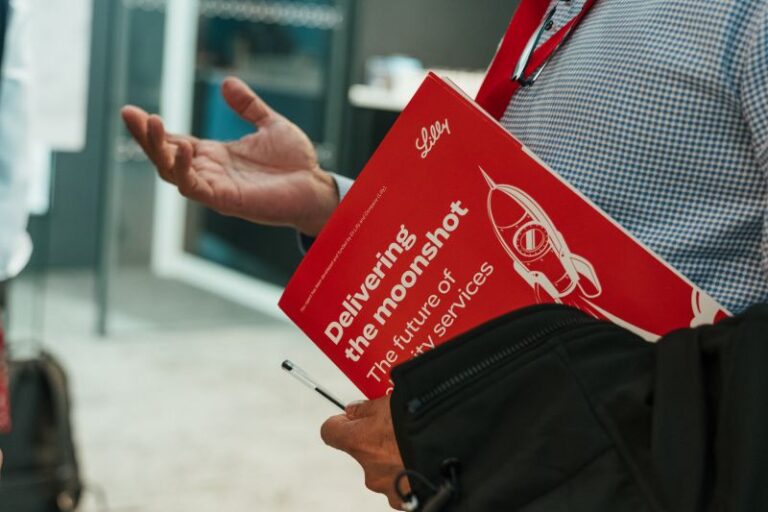
That eye-opening statistic was shared with us when the Eli Lilly-hosted system event Delivering the Moonshot: The Future of Obesity Services was held in Manchester, reinforcing a pivotal shift in understanding…
Obesity must be treated as a chronic, biological and relapsing condition, strongly shaped by genetics, deprivation and environment – not as a failure of individual choice.
So, what are the implications for GM Active and our collective of 11 member organisations? Our Head of Business Operations, Jon Keating, shares his thoughts here.
Obesity is a systemic challenge and an opportunity, presenting one of the most significant long-term risks to population health, NHS sustainability and economic participation across Greater Manchester.
Around two-thirds of adults are already living at an unhealthy weight, with obesity prevalence rising above 30% in more deprived communities.
What Delivering the Moonshot: The Future of Obesity Services Obesity taught those of us who attended is that obesity must no longer be viewed as a simple lifestyle issue or a failure of personal responsibility.
That shift in understanding has major implications for the future role of physical activity, leisure and community-based support.
For GM Active and our member organisations, it presents an opportunity to position physical activity not as an ‘add-on’ to tackling obesity, but as an essential part of the health system infrastructure within modern neighbourhood health.
Evidence shared during the Moonshot session reinforced the growing scientific consensus that obesity is driven by complex biological mechanisms.
Around 1,000 genes are now understood to influence appetite regulation, satiety, energy expenditure and body weight, we were told. These biological drivers interact with an environment characterised by sedentary lifestyles, high-calorie food availability and socio-economic disadvantage.
Speakers also highlighted the role of visceral fat as a biologically active organ – not simply stored energy. Excess visceral fat contributes to inflammatory processes linked to more than 200 health conditions, including:
Yet despite this evidence, stigma remains one of the greatest barriers to effective obesity care. The belief that obesity is simply about willpower or personal choice continues to:
Removing the stigma, therefore, isn’t simply a communications challenge – it is a structural requirement for better health outcomes that every member of the GM Active collective aspires to.
The scale of obesity across Greater Manchester makes it a major system sustainability issue. Current estimates show:
In fact, projections suggest up to half of all adults could be clinically obese by 2050 without significant intervention, it was said.
The impact extends far beyond healthcare. Obesity is a major contributor to:
In essence, the estimated £3.2 billion annual cost mentioned at the top of this blog reflects the cumulative impact across the entire system – not just NHS treatment costs. This is no longer a niche public health issue. It is a defining challenge for the future sustainability of health and care services and one where we can play a pivotal role.
A recurring theme throughout the Moonshot discussion was that current obesity services remain fragmented, inconsistent and difficult to access.
Because obesity care is not a mandatory NHS service, provision varies significantly between areas, thus creating:
Currently, only around 3% of people who could benefit from obesity treatment can access it.
While diet and physical activity remain foundational components of care, evidence presented during the session highlighted that isolated lifestyle interventions often deliver only modest outcomes when unsupported by broader pathways.
Typical weight loss through a lifestyle-only approach averages around 2-3%, while significantly better outcomes are achieved when behavioural support is combined with medication, continuity of care and long-term engagement.
The conclusion was clear – short-term interventions cannot solve a chronic condition.
The emergence of obesity medications and modern treatment pathways does not reduce the importance of physical activity – it increases it!
As obesity services evolve, demand will grow for:
This creates a major opportunity for the leisure and physical activity sector to become a core part of integrated obesity care pathways.
Physical activity services should increasingly be recognised not as discretionary leisure provision, but as essential community health infrastructure.
One of the most important themes emerging from the event was the need to move beyond the false divide between prevention and treatment.
With more than 100 contributing factors influencing obesity, no single preventative intervention can operate at sufficient scale on its own.
However, supporting people earlier – before overweight progresses to obesity – can significantly reduce mortality and long-term health complications. The future, therefore, lies in integrated pathways that combine prevention, early intervention, treatment and long-term management.
Obesity must increasingly be approached in the same way as conditions such as asthma or diabetes: through continuous, supported care rather than time-limited programmes.
The Delivering the Moonshot agenda pointed towards a future obesity service framework built around:
Neighbourhood health is central to this vision, alongside stronger integration between primary care, pharmacies, community providers, VCSE organisations and digitally enabled services.
This creates a significant opportunity for organisations – such as the GM Active collective – already embedded within our local communities.
GM Active is uniquely positioned to support this transformation across Greater Manchester, not directly delivering frontline obesity services, but acting as a strategic convenor and integrator and as a connector between health, local government and community delivery.
We could, and should, become a governance and ethical oversight body and the lead for data, insight and workforce development.
The GM Active member organisations would form the locality-based delivery infrastructure within this model.
They are already embedded within neighbourhoods and trusted by local communities, and this unique combination of strategic coordination and local delivery creates a scalable, place-based model for obesity support across Greater Manchester.
For many people, leisure and community settings can feel safer and more welcoming than traditional clinical environments. This is particularly important in communities experiencing higher levels of deprivation and health inequality.
Local facilities and neighbourhood-based services can help to:
This relational, community-based approach is something our sector is uniquely positioned to offer, especially in pursuit of long-term engagement. Many tiered services struggle once formal programmes end, creating gaps where relapse becomes more likely.
Our members can offer continuous support in familiar environments with trusted relationships as part of an accessible community infrastructure. This continuity may prove critical to improving outcomes and reducing drop-out rates.
To fully realise this opportunity, GM Active will increasingly need to position obesity and metabolic health as strategic priorities, develop a GM-wide framework with local flexibility, strengthen workforce capability, expand data and evaluation systems and continue shifting from programme-based delivery towards pathway-based support.
GM Active and our member organisations are well placed to become a defining part of Greater Manchester’s response to obesity.
By combining strategic integration, ethical leadership and trusted local delivery, our sector can help:
All of this represents an evolution of GM Active’s role while staying true to our values.
Ideas and projects are continuously evolving and progressing at GM Active. View our latest news stories below to find out how we are moving as one and contributing towards building the healthy, happy and prosperous Greater Manchester we all aspire to.