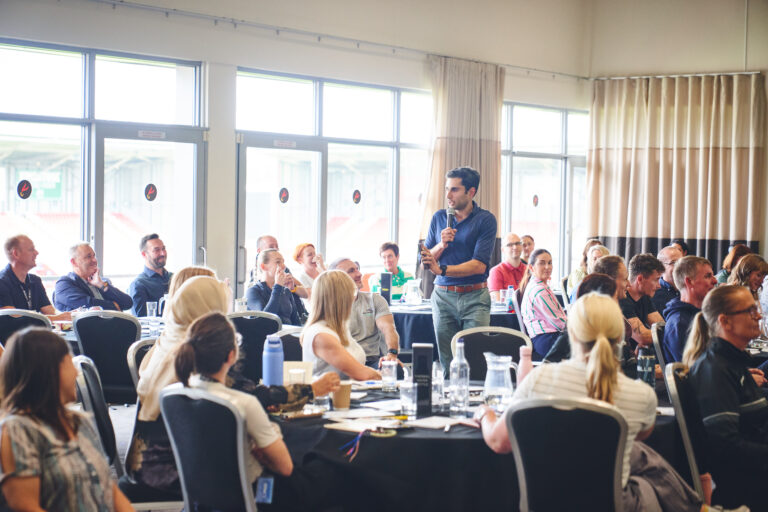
Exercise referral has huge potential, yet services across the UK remain inconsistent, fragmented and difficult to scale. GM Active and LFX convened this conference to explore how referral pathways can work better locally, regionally and nationally. What emerged was a much broader conversation – not simply about referral schemes, but about behaviour change, prevention, community, workforce capability, data, healthcare integration and health inequalities.
The UK faces increasing levels of long-term health conditions, widening health inequalities and growing pressure on health and care services. Physical activity remains one of the most effective interventions available, yet access to effective support remains inconsistent.
A clear message emerged:
The challenge is no longer proving that physical activity works. The challenge is creating systems capable of helping more people benefit from it.
1. People join possibilities, not programmes
People are motivated by confidence, independence, family, purpose, belonging and quality of life – not by programme participation alone.
2. Behaviour change is the intervention
Exercise is the tool. Behaviour change is the intervention. Coaching, motivational interviewing and ongoing support must become central to future pathways.
3. Relationships drive adherence
Successful services are relationship-based rather than referral-based. Trust, follow-up and personalised support drive long-term outcomes.
4. Community is a health intervention
Belonging, peer support and social connection are critical contributors to sustained participation. Community is not an add-on – it is part of the intervention.
5. Clinical integration matters
The sector must move from ‘selling’ itself to the NHS towards working with the NHS through Active Practices, social prescribing, neighbourhood health and integrated care pathways.
6. Workforce capability is fundamental
Future practitioners require skills in health coaching, behaviour change, motivational interviewing and personalised care. Fitness professionals increasingly need to operate as wellness professionals.
7. Data must demonstrate what matters
Common datasets, shared outcomes and stronger evidence will be essential to future commissioning and investment decisions.
The conference reached broad agreement around seven priorities:
Exercise referral should evolve from a fragmented collection of local programmes into a co-ordinated movement-for-health system that is person-centred, behaviour-change focused, community connected, clinically integrated and capable of improving health outcomes at scale.
Immediate priorities (0–12 months)
Medium-term priorities (1–3 years)
Long-term ambition (3–5 years)
The evidence is already strong.
The challenge is no longer proving that physical activity works.
The challenge is ensuring more people can access, engage with and sustain the benefits of movement throughout their lives.
From exercise referral → movement for health
From programmes → possibilities
From participation → transformation
Ideas and projects are continuously evolving and progressing at GM Active. View our latest news stories below to find out how we are moving as one and contributing towards building the healthy, happy and prosperous Greater Manchester we all aspire to.