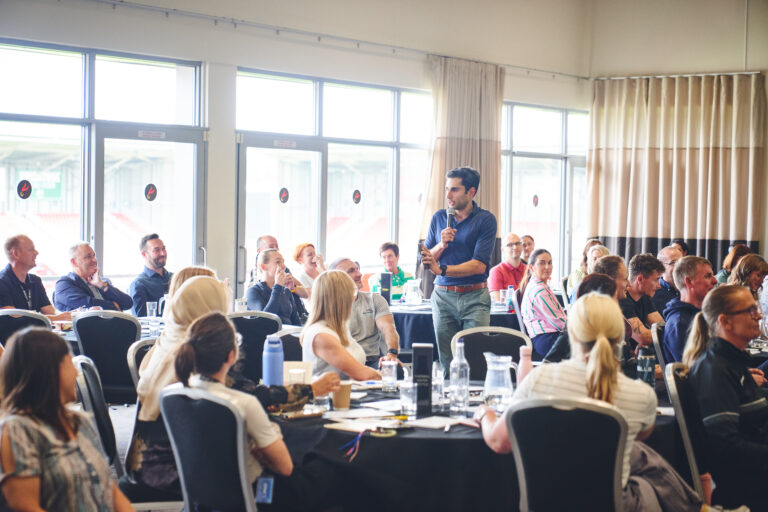
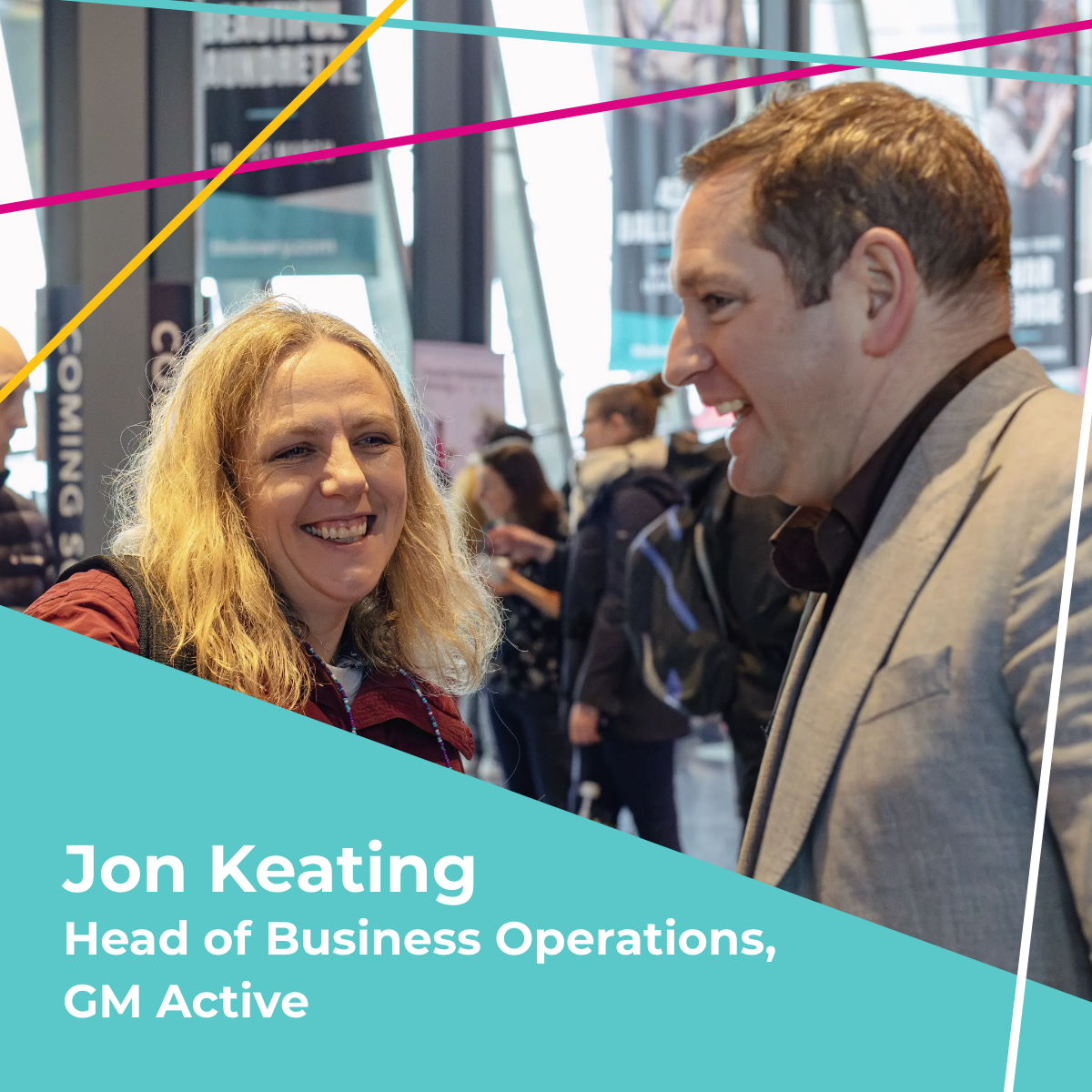
Those questions and more have occupied the thoughts of our Head of Business Operations, Jon Keating, after he spent two days at WelshConfed26, the annual gathering for health and care leaders across Wales, bringing together professionals from the NHS, social care, local government, the voluntary sector, research and industry.
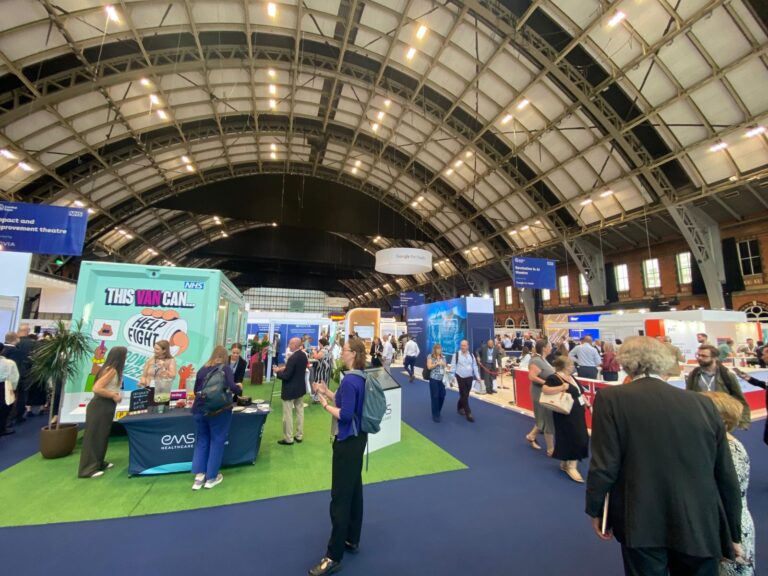
Jon’s time in the principality followed his visit to the English equivalent Confed in Manchester, after which he advanced his ‘elephant in the room’ theory about the apparent lack of understanding between ‘health’ and ‘leisure’ and how they could work together in pursuit of better population health.
In the end, Jon left Cardiff with this belief:
‘Our sector cannot keep attending its own conferences, agreeing with itself that physical activity matters and then complain that wider systems do not understand our value.’
Here, Jon shares his experience and the events that have shaped his questions and opinion.
I had been in the room for almost two days before public leisure finally entered the conversation.
Across the WelshConfed26 programme, I heard repeated calls for prevention, care closer to home, stronger communities, new partnerships and a shift away from hospital by default.
For most of that time I kept quiet. Not because Greater Manchester had nothing to add. Quite the opposite. In almost every session I could think of an example from our 10 boroughs – Prehab4Cancer (P4C), exercise referral, community rehabilitation, workforce development, free swimming and the developing relationship between public leisure and health.
But I was in Cardiff to listen and learn, not to spend two days telling another system how clever Greater Manchester is.
Then, in the final session, Annie Hillman from Celtic Leisure spoke about what public leisure can offer, drawing on both Celtic Leisure and previous experience with GLL in Cardiff. Annie kindly introduced me too: “This is Jon from Manchester, and he has hundreds of examples.”
The response that followed crystallised something I had been wrestling with throughout the conference, the price of living a healthier life.
Almost immediately the cost of a family swim became the focus of the conversation.
Affordability matters. Of course it does. But I wanted to say that Greater Manchester has experience of free swimming and that removing price does not, by itself, remove the barriers to participation.
Confidence, culture, accessibility, relevance, awareness, transport, previous experience and whether an activity feels ‘for people like me’ all matter too.
I tried to make the point, but the conversation had moved on.
It was a small moment, but it felt like a microcosm of a much bigger problem: we keep returning to cost when the real conversation should be about value.
In 2023, after attending Elevate, I wrote about an elephant in the room. At the time our sector was talking enthusiastically about a pivot towards health, but very few health colleagues were there. We were largely preaching to the converted.
Two years later, I attended both Elevate and the English NHS ConfedExpo and found a mirror image. There were relatively few leisure voices in the NHS room, despite its delegates discussing prevention, neighbourhood health, long-term conditions and community-based care.
My conclusion then was that our sector needed to show up in health’s spaces and demonstrate that we could be a valued partner.
After Cardiff, I’m no longer sure the most important question is whose room we should enter.
Perhaps the more important question is why we still describe the rooms as belonging to separate worlds?
One word kept bouncing around my head during the conference: good. Not just health. Good health.
Health can quickly become institutional language: health services, health pathways, health budgets, health professionals and health interventions.
Good health feels different. Ask someone what good health means and the answer is unlikely to be an efficiently utilised care pathway.
It may be playing with grandchildren, walking the dog, going to work, sleeping properly, living independently, having friends, feeling useful, moving without pain or belonging somewhere.
That distinction was present throughout the conference, even when the words were different.
The following morning, the Welsh Health Minister spoke about people living ‘longer lives in good health for longer’ – a phrase that landed heavily after the reflections of the previous evening.
This is the uncomfortable question Cardiff left me with.
The NHS is indispensable. When someone has cancer, a stroke, a broken hip or needs surgery, the NHS provides expertise and care that other sectors cannot and should not pretend to replace.
But is an institution principally organised and funded to diagnose, treat and manage illness the natural owner of good health?
The conference repeatedly called for prevention, community by design, shifting upstream and moving care closer to home.
Yet one presentation showed secondary care accounting for 78% of Welsh local health-board expenditure in 2023/24, compared with 20% for primary care. The challenge is not that NHS colleagues do not believe in prevention. Many clearly do. The difficulty is structural. Genuine prevention may require money, workforce, influence and agency to move elsewhere.
That can make transformation an uncomfortable thought process for the NHS. Not because people in the NHS lack commitment, but because institutions rarely find it easy to release the things that sustain them.
Perhaps the NHS is best understood as an essential partner in good health, not its automatic owner or senior partner.
One conference comment particularly resonated with me: ‘The NHS is product led’.
Our sector can respond by offering more products: cancer prehabilitation, exercise referral, falls prevention, weight management, mental-health activity programmes and long-term-condition pathways.
Some of those products are excellent. P4C is a powerful Greater Manchester example of clinical and community provision working together.
But products can also become small change. They may treat part of the consequence while leaving the conditions that produce poor health largely untouched.
If we do what we have always done, we will get what we have always got: another pilot, another short-term funding cycle and another round of proving something that has already been shown to work.
The more courageous question is not ‘what product can we sell the NHS?’ It is ‘how can we collectively create the conditions for good health?’
That’s why my most encouraging conversation in the WelshConfed26 marketplace was with Movember. It did not begin with GM Active offering a men’s mental-health programme. It began with an agreement to keep talking and co-design the art of the possible.
That feels like a very different starting point.
Good health is shaped in homes, schools, workplaces, parks, libraries, cultural venues, leisure facilities, community groups and everyday relationships. It is influenced by income, housing, food, education, employment, movement, purpose, connection and belonging.
That means public leisure and physical activity have a role, but not as the new winner and not as a cheaper substitute for healthcare.
The same is true of the VCSE sector, arts and culture, housing, education, employers and local government. Each understands parts of people’s lives that no single institution sees in full.
Nobody should own good health. Good health should be the shared outcome.
For GM Active, that thought leads to a deceptively simple reflection:
Our ambition is to help create good health.
The important word is help. GM Active cannot create good health alone. Nor should it define good health for communities whose experiences differ from those of the people in boardrooms and conference halls. ‘Doing with, not doing for’ must apply to us too.
A Nuffield Trust presentation contrasted two public-policy languages. The rational language of targets, evidence, productivity, accountability and value for money sat alongside the relational language of trust, connection, warmth, friendship, hope and wellbeing.
The health system needs the rational language because clinical, financial and public accountability matter. But much of good health is lived in the relational language.
The problem comes when one language is treated as superior and community organisations must continually translate relationships, belonging, purpose and movement into institutional terms before they are considered legitimate.
The swimming exchange in Cardiff demonstrated this in miniature. Cost is straightforward to quantify. Value is harder. A swim might offer movement, confidence, enjoyment, water competence, family connection and a relationship with activity that lasts for years. Equally, a free session has little value if the people it is intended to support still do not feel able or welcome to attend.
Value is not the same as price. Free is not the same as accessible. And evidence should illuminate human experience rather than flatten it.
It would be easy to leave Cardiff and criticise the NHS for not understanding public leisure. That would be unfair and, frankly, convenient.
For two days the Welsh health and care system gathered to discuss prevention, inequalities, community, rehabilitation and good health. My colleague Annie and I appeared to be among very few people from the public leisure sector in the room.
We tell ourselves every day to meet people where they are. The NHS was in Cardiff. Where were we?
Our sector cannot keep attending its own conferences, agreeing with itself that physical activity matters and then complain that wider systems do not understand our value.
Being in different rooms is not primarily about arriving with a product to sell. It is about listening, learning, building relationships and contributing as a confident equal when appropriate.
I could have offered a Greater Manchester example in almost every session. I deliberately did not. Listening to another system was the point. But the experience also reassured me that Greater Manchester is progressing some of this thinking in practice, even while plenty remains to do across our 10 boroughs.
My first elephant blog asked why health was not in leisure’s room. The second asked why leisure was not in health’s room.
WelshConfed26 has left me wondering whether the next stage is to stop thinking in terms of either room.
Good health is too important and too complex to belong to the NHS, public leisure, local government, the voluntary sector or any other institution. It is created collectively through people, communities, places and the conditions of everyday life.
The NHS will remain essential. Public leisure will remain one contributor among many. Courageous leadership is not about replacing one hierarchy with another or arguing over who should ‘win’ this perceived tussle.
It is about giving up the assumption that one organisation must sit above the rest.
Perhaps the question is no longer ‘how do we become a valued partner of the NHS?’ Perhaps it is ‘how do all of us become equal partners in creating good health?’
That may require different money, different measures, different relationships and a different distribution of agency. It certainly requires more of us to leave our familiar rooms.
And it may begin with a four-letter word that carries far more weight than we usually give it…
Further reading: Reimagining Exercise Referral
Ideas and projects are continuously evolving and progressing at GM Active. View our latest news stories below to find out how we are moving as one and contributing towards building the healthy, happy and prosperous Greater Manchester we all aspire to.